P&ES
Parent brand for operations, HSE and investor records.

Brands
P&ES does not hide behind a forest of sub-brands. Operating lines are named so a client knows who owns the scope.
Petroleum & Energy Surge is the legal and public name. Short form: P&ES. Service lines — drilling, oil and gas services, integrated, renewables, investor administration — are descriptions of work, not separate promises.
If a campaign needs a third-party brand on site, it appears in the bridging document with its own insurance, competence and stop-work rules.
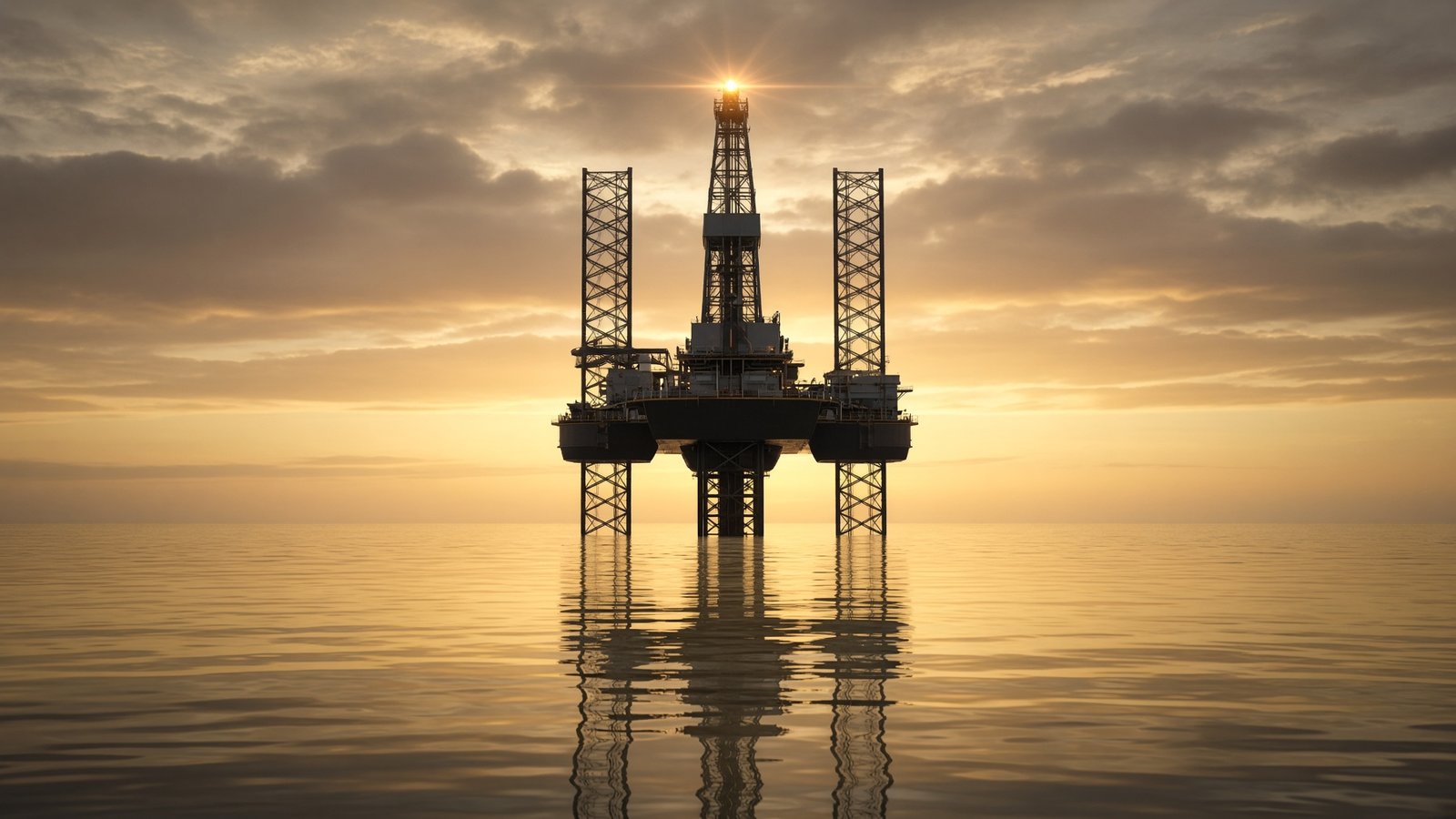
A jack-up at dusk is a piece of kit in a weather window. We use the photograph because it is the work. We do not print a slogan across the legs.
Hold-points, barrier tests and portal postings are not branded experiences. They are controls. Dressing a control in a campaign identity is how people stop reading it.

In practice
If the name on the hat and the name on the incident report differ, we have a structure problem. One company. One file.
Capability notes
Parent brand for operations, HSE and investor records.
Offshore and onshore well construction support.
Oil and gas operations, integrity and coordination.
Maintenance, fabrication and project controls.
Renewable generation and integration engineering.
Private administration of approved participation plans.
Operators ask
No. Competence and stop-work travel under our name, or they do not travel.
They have descriptions. Marks that fragment accountability are refused.

From the field
How energy companies actually work
Primary barrier is usually hydrostatic — the mud column. Secondary is mechanical — the BOP. If either is unproven, the bit does not turn.
Offshore is weather, marine spread and the stack. Onshore is access, water, pads and neighbours. Do not copy a jack-up plan onto a land pad.
A hold-point is a named gate with a criterion and an owner. ISO 45001 is the management-system language. A poster is not.
Solar on a producing location still needs isolations, lifting and SIMOPS. Reliability first. Intensity reduction second.
Investor administration uses the same idea as well control: nothing posts without evidence.
Roads, noise, local workforce and grievance routes belong in the mobilisation pack.
Safety as an operating condition
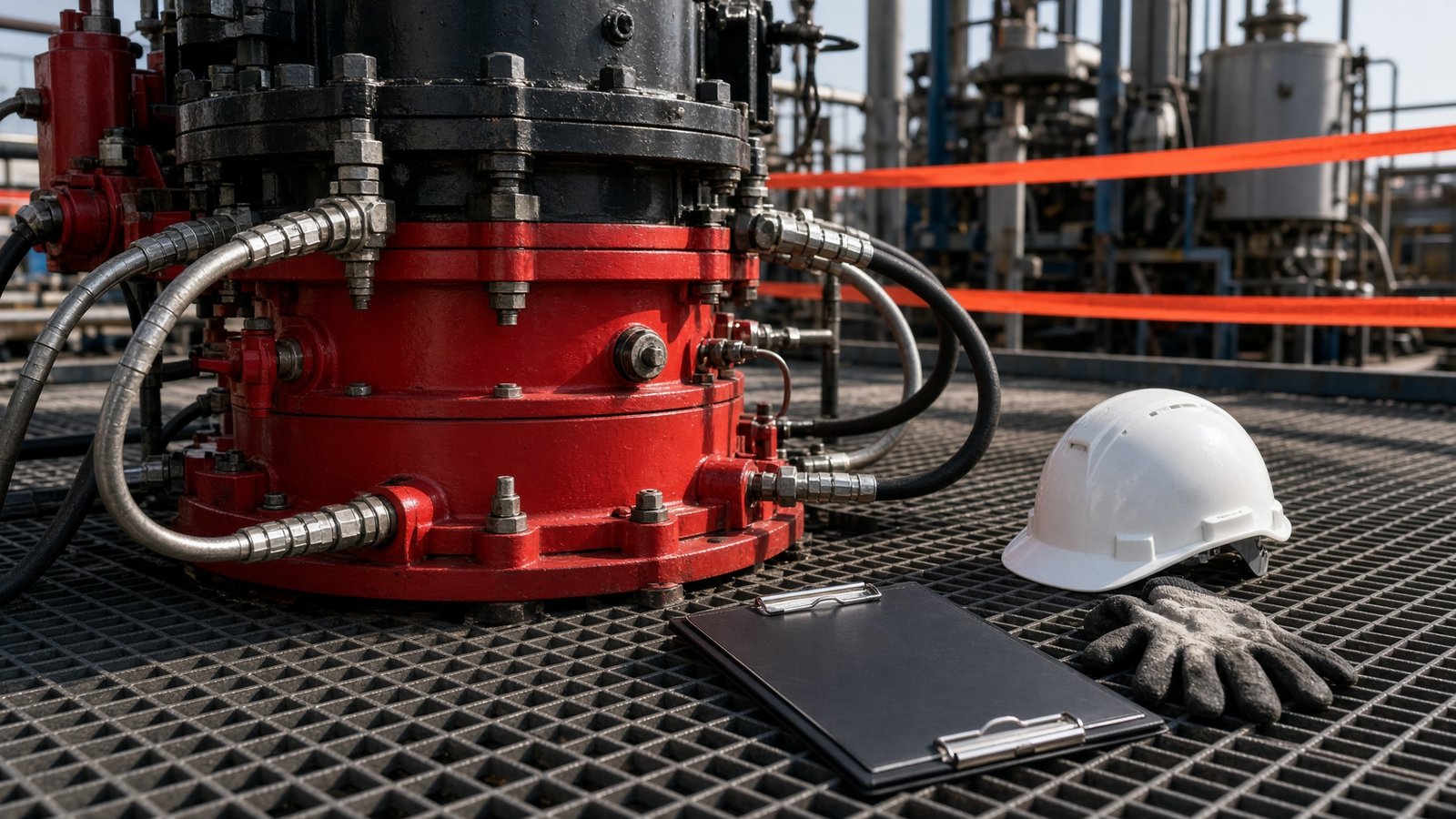
P&ES treats competence, barriers, SIMOPS and return-to-service as hold-points. Digital tracking names who released the step. Stop-work is not insubordination.
The energy system
Upstream
Exploration, appraisal and development are different jobs. The abandonment plan should be visible before the first joint.
Plant
Inspection planning is production support, not a compliance tax.
Power
Interconnection and offtake decide whether a plant is an asset or a stranded slide.
People
Tickets have dates. A frozen crew list is a hold-point. A CV is a biography.
Keep reading