Technical sessions
Well control, SIMOPS, pad efficiency and subsea systems — presented by people who have run the gates.

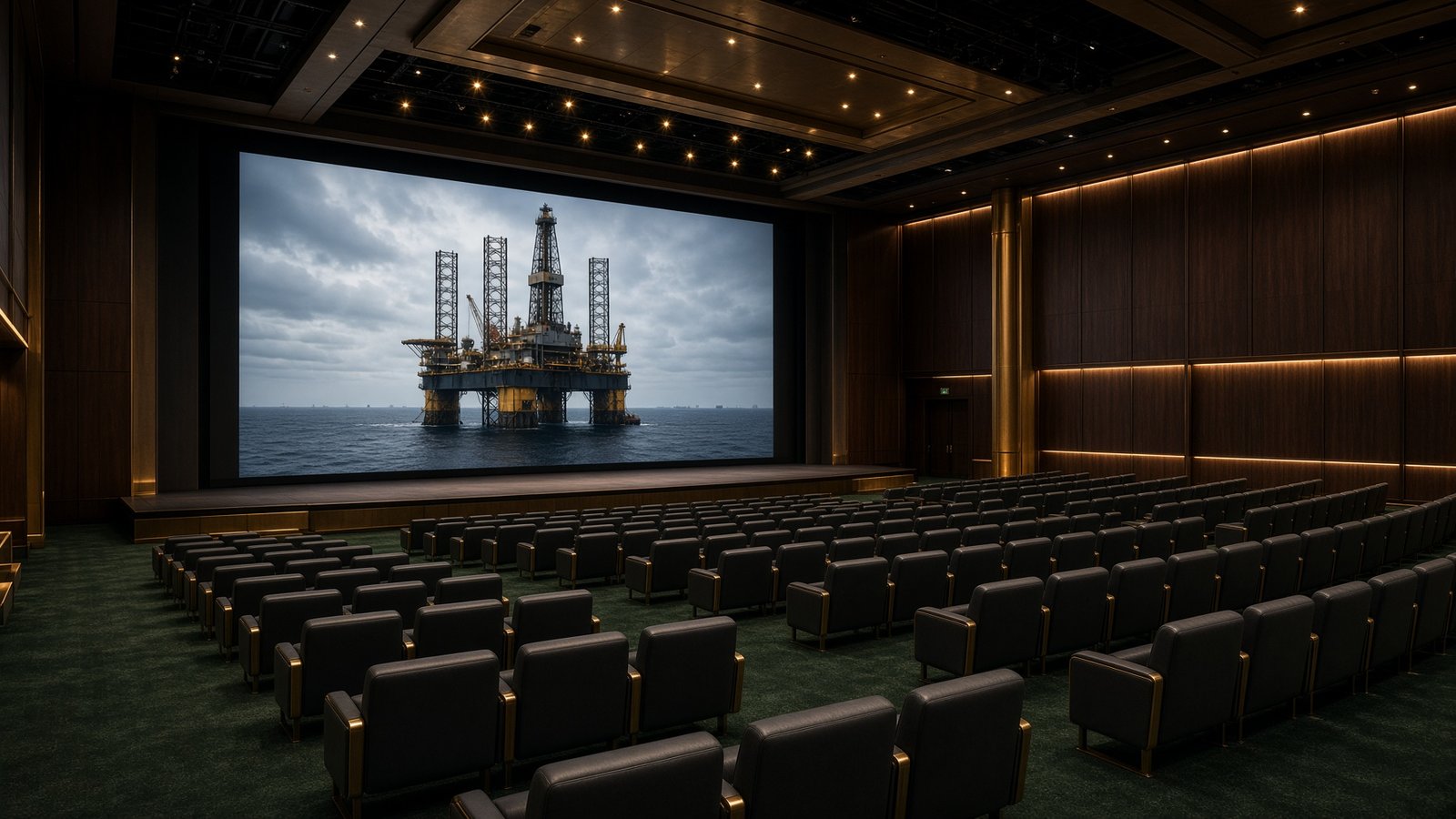
Industry Events
P&ES attends a small number of technical and commercial gatherings each year — not for spectacle, but to keep well-class, grid-code and HSE conversations current.
If the programme cannot name wells, plants or interconnection problems, it is marketing. We send people who can speak to a method statement, a barrier test and a close-out file.
Attendance is a work assignment: agenda, named owner, notes that re-enter planning. Conference badges are not a substitute for competence. A week on the road that does not change a procedure was wasted capital.
We prefer smaller technical rooms over exhibition-floor theatre. A well-control workshop with twenty people who have shut in a well is more useful than a keynote about the future of energy.
Technical drilling and well-control forums, offshore technology weeks, renewable interconnection workshops, and operator HSE days. Dates move; the standard does not: one briefing in, one briefing out.
Investor-facing sessions are scheduled separately. Mixing a sales pitch into a well-control room degrades both conversations. Portal administration has its own disclosure rules; those rules travel with the speaker.
Every attendance produces a two-page note: what we heard, what we rejected, what changes a P&ES procedure or a client briefing. The note is filed against the unit that paid for the ticket.
If a vendor demonstration cannot be tied to a hold-point, it does not enter the method statement. New tools wait for a named trial, a competence plan and a stop-work rule.

In practice
We photograph the slide deck only when it will be cited. We do not collect branded bags. The test of an event is whether a night-tour supervisor later uses a sentence that was spoken there.
If you invite P&ES to speak, send the well class, the water depth or the interconnection status first. We will tell you honestly whether we have something to add.
Capability notes
Well control, SIMOPS, pad efficiency and subsea systems — presented by people who have run the gates.
Closed briefings with clients on campaign windows, bridging documents and lessons from the last close-out.
Grid-code, storage and industrial offtake — only where resource and interconnection are real.
Portal administration, risk disclosure and how records survive review. Not a sales rally.
Permit-to-work, isolation and stop-work culture as practice, not a poster.
What changed in our files. If nothing changed, we should not have gone.
Operators ask
Rarely. A stand is not a capability. We exhibit only when a client has asked us to be findable in that hall.
Technical rooms stay technical. Investor questions belong in a portal briefing with risk disclosure on the table.
If the programme admits that reliability is a constraint. We will not decorate a slogan.
Write to the office with the agenda, the audience and the decision you want the room to make.

CAREERS, PEOPLE, POSSIBILITY
The future of energy depends on people with different experiences, skills, and ideas working toward a shared purpose. At Petroleum & Energy Surges, we believe diverse perspectives make our teams stronger and our solutions more effective.
We are building an inclusive workplace where people are respected, encouraged to contribute, and supported in developing their potential. Every colleague has a role in helping us solve complex challenges responsibly and creatively.
A career with Petroleum & Energy Surges offers the opportunity to work alongside experienced professionals, develop practical skills, and contribute to projects that support the energy needs of today and the transition ahead.
We aim to provide a values-led environment where performance, learning, collaboration, and wellbeing are all part of a rewarding working experience.
Different backgrounds. Shared ambition. One team working to power progress.
WHY JOIN US
We welcome different perspectives and work to create an environment where people feel respected, heard, and able to contribute with confidence.
We support learning through practical experience, training, mentoring, and opportunities to build the skills needed in a changing energy industry.
Our people work across disciplines, locations, and business areas—sharing knowledge and combining expertise to deliver stronger solutions.
We recognize performance, commitment, and contribution through competitive reward practices aligned with role, location, and business performance.
We support policies and benefits that help employees balance their personal responsibilities, wellbeing, and professional ambitions.
Our teams contribute to energy solutions that help customers operate today while supporting a more responsible and sustainable future.
Join a global team where your experience, curiosity, and ambition can help shape the next chapter of energy.

YOUR FUTURE
Build skills, share ideas, and help develop the energy solutions of tomorrow.
A workplace shaped by respect, opportunity, and the power of collaboration.
From the field
How energy companies actually work
Primary barrier is usually hydrostatic — the mud column. Secondary is mechanical — the BOP. If either is unproven, the bit does not turn.
Offshore is weather, marine spread and the stack. Onshore is access, water, pads and neighbours. Do not copy a jack-up plan onto a land pad.
A hold-point is a named gate with a criterion and an owner. ISO 45001 is the management-system language. A poster is not.
Solar on a producing location still needs isolations, lifting and SIMOPS. Reliability first. Intensity reduction second.
Investor administration uses the same idea as well control: nothing posts without evidence.
Roads, noise, local workforce and grievance routes belong in the mobilisation pack.
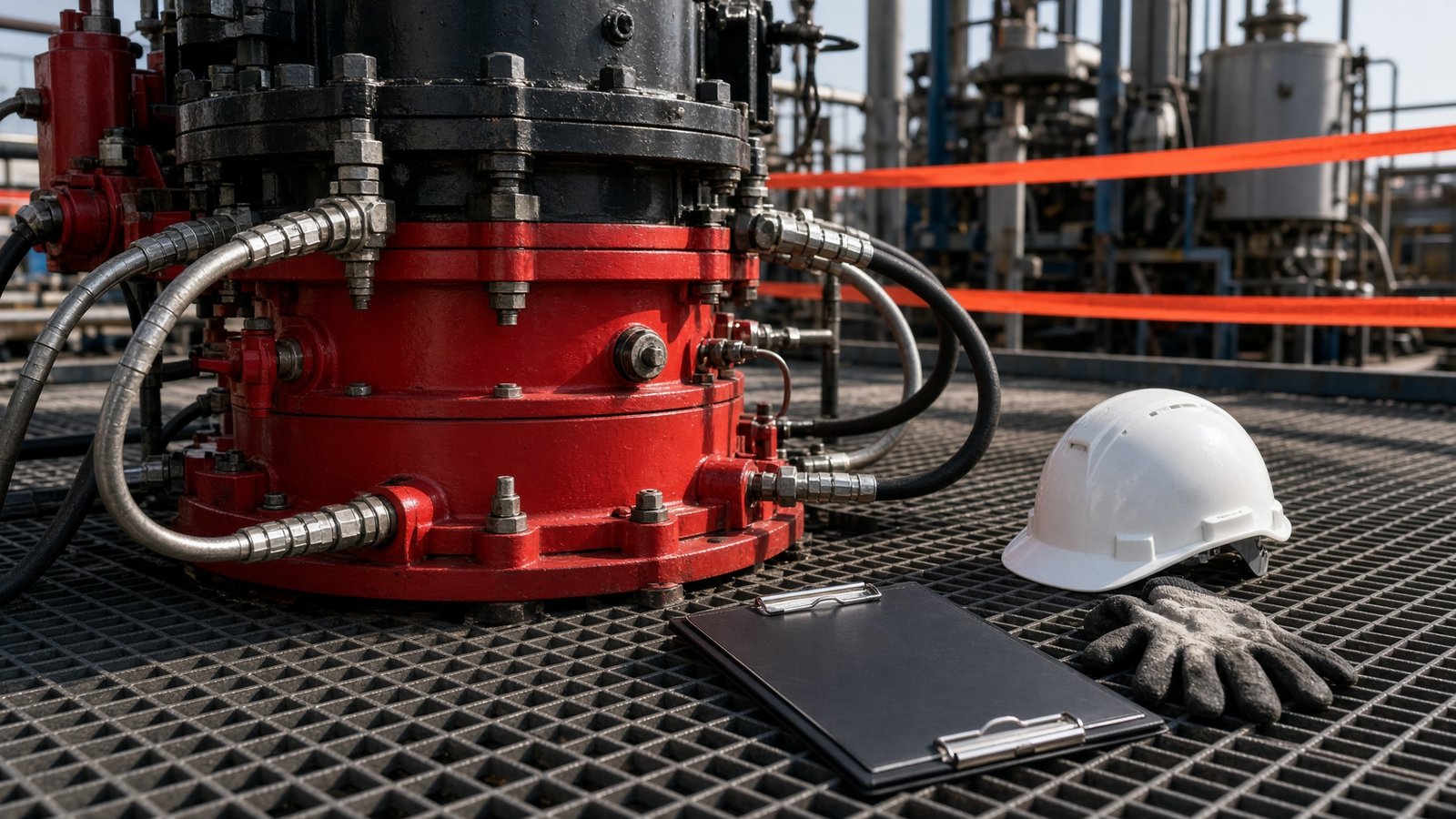
Safety as an operating condition
P&ES treats competence, barriers, SIMOPS and return-to-service as hold-points. Digital tracking names who released the step. Stop-work is not insubordination.
The energy system
Upstream
Exploration, appraisal and development are different jobs. The abandonment plan should be visible before the first joint.
Plant
Inspection planning is production support, not a compliance tax.
Power
Interconnection and offtake decide whether a plant is an asset or a stranded slide.
People
Tickets have dates. A frozen crew list is a hold-point. A CV is a biography.
Keep reading